

Can your current transport fleet survive a midday traffic jam in 45-degree heat without compromising your signature menu? You already know that maintaining 100% food quality from the kitchen to the table is non-negotiable for a successful business. Every professional caterer understands the intense pressure of transporting temperature-sensitive dishes while worrying about spoilage, cramped space, or strict health and safety regulations. Utilizing a dedicated refrigerated van for catering transforms these logistical challenges into a seamless, reliable part of your operation.
This guide will show you how the right temperature-controlled vehicle ensures food safety in high-ambient environments and provides the necessary capacity to scale for large weddings and corporate galas. We'll explore the technical standards for 2026, discuss how flexible rental models help you avoid the high costs of maintaining a permanent fleet, and detail the essential features that keep your cold chain intact. You'll gain a clear understanding of how to protect your reputation and grow your service area with confidence and precision. By the end of this article, you'll have a methodical plan to upgrade your logistics and ensure every event is a success.
Key Takeaways
- Learn how a refrigerated van for catering maintains precise temperature control and protects food integrity during high-heat transport.
- Identify essential technical standards, such as easy-to-sanitise food-grade linings and real-time temperature monitoring for driver awareness.
- Master event logistics by calculating cargo capacity accurately and organising loading protocols for maximum efficiency on-site.
- Understand the financial advantages of flexible chiller and freezer van rentals compared to the high overhead costs of vehicle ownership.
What is a Refrigerated Van for Catering?
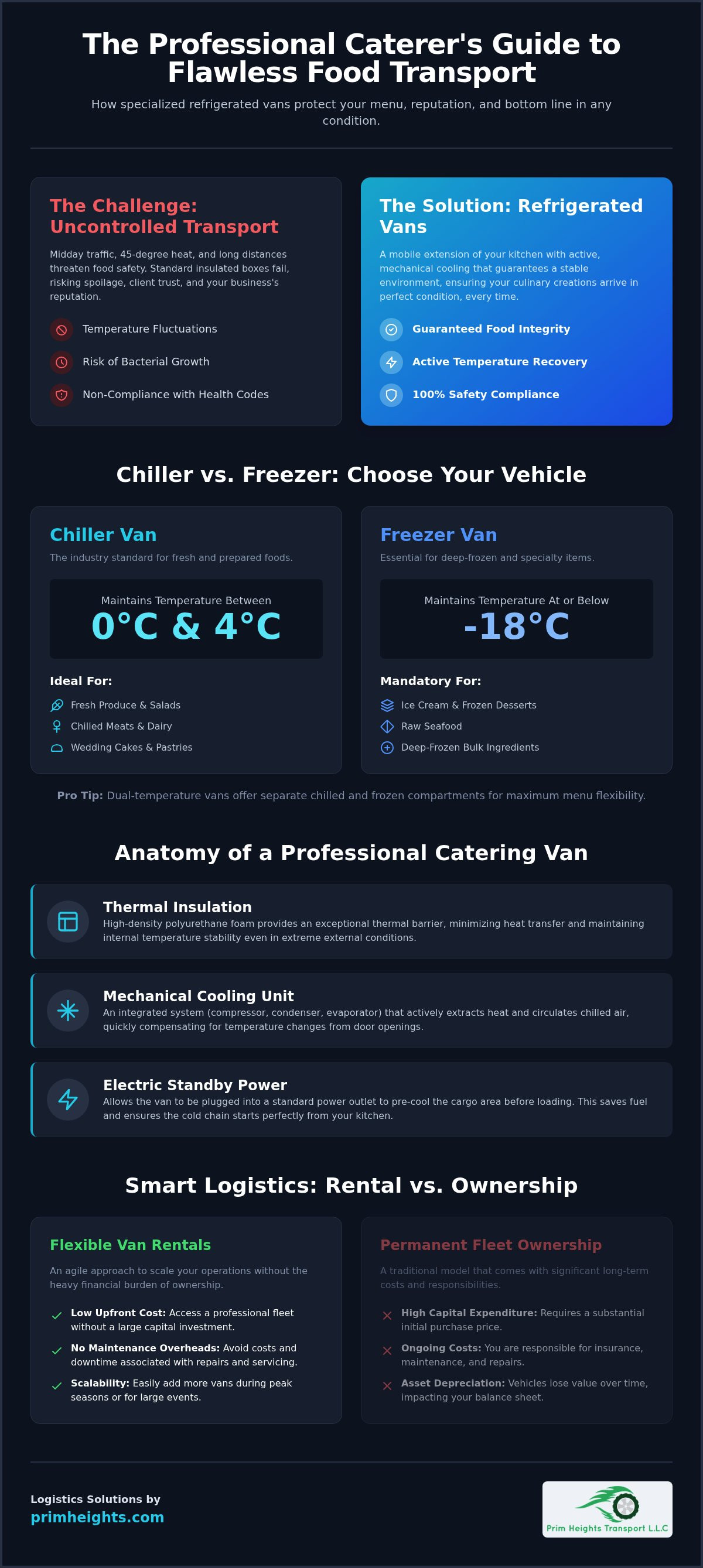
A refrigerated van for catering serves as a mobile extension of your professional kitchen. It's a precision tool designed to preserve the integrity of your ingredients through active temperature management. Unlike standard vehicles modified with simple insulated boxes, these professional vans feature integrated mechanical systems that actively fight external heat to keep your cargo safe. This active cooling is vital for maintaining food safety standards, especially when you are stuck in heavy traffic during high-ambient temperatures. While passive cooling methods like ice packs and insulated bags lose their effectiveness within hours, a dedicated refrigerated vehicle maintains a stable environment for as long as the system is running.
Standard insulated boxes are insufficient for large-scale professional catering because they cannot recover lost temperature. Every time a box is opened, cold air escapes and the internal temperature climbs. In a professional van, the cooling system quickly compensates for these fluctuations. This ensures that delicate items like seafood, dairy, and prepared hors d’oeuvres remain within the safe "cold chain" window from the moment they leave your facility until they reach the guest's plate.
The Core Components of a Catering Van
The reliability of these vehicles stems from three critical engineering elements that work in tandem to protect your inventory. These components are designed to handle the rigours of frequent door openings and extreme external conditions.
- Thermal Insulation: Most modern units use high-density polyurethane foam. This material is lightweight and provides an exceptional thermal barrier that minimizes heat transfer through the van's walls.
- Mechanical Cooling Unit: This system includes a compressor, condenser, and evaporator. It works by extracting heat from the cargo area and circulating chilled air to maintain your specific set point.
- Standby Power Options: Professional vans often feature electric standby capabilities. This allows you to plug the vehicle into a standard power outlet to pre-cool the interior before loading, saving fuel and ensuring the cargo area is at the correct temperature before you start your route.
Chiller vs. Freezer: Which Does Your Menu Need?
Choosing between a chiller and a freezer depends entirely on your specific menu requirements and the duration of your transport. Selecting the wrong type can lead to either food spoilage or unwanted texture changes in your dishes.
Chiller vans are the industry standard for most catering operations. They typically maintain temperatures between 0°C and 4°C, which is the ideal range for fresh produce, salads, chilled meats, and dairy products. If you are transporting a wedding cake or delicate pastries, a chiller van provides the necessary cooling without the risk of freezing the ingredients. Freezer vans are essential for specialized needs. They maintain temperatures at -18°C or lower, making them mandatory for transporting ice cream, frozen desserts, or raw seafood that must remain deep-frozen until preparation. For businesses with diverse menus, dual-temperature vehicles provide separate compartments for both chilled and frozen goods in a single trip, offering maximum logistical flexibility.
Key Benefits of Using Temperature-Controlled Vans for Events
Professional catering requires more than culinary skill; it demands logistical excellence. Utilizing a specialized refrigerated van for catering ensures your business remains in 100% compliance with national food safety and hygiene regulations. This adherence is not just about avoiding fines. It's about protecting your brand's reputation by preventing food spoilage and potential illness. A single instance of temperature-related food poisoning can end a catering business. By maintaining a strict cold chain, you provide clients with the peace of mind that their guests are safe.
Beyond safety, these vehicles offer a clear path to higher profitability. They allow you to expand your service area by enabling longer transport times for fresh food, reaching clients in distant cities without compromising quality. This capability reduces food waste, which directly improves your bottom line on large-scale contracts. When you don't have to discard ingredients due to heat exposure, your margins remain healthy and predictable. This reliability builds trust with corporate clients who require consistent results for their high-stakes events.
Maintaining Food Quality and Texture
Stable temperatures are the only way to prevent rapid bacterial growth in high-risk foods like poultry and dairy. When temperatures fluctuate, delicate ingredients such as raw seafood or whipped cream suffer immediate structural damage. Seafood can become rubbery or develop off-flavours, while cream-based sauces may split or lose their volume. Precise, consistent cooling preserves the "just-prepared" taste of event food by halting the enzymatic reactions that lead to ingredient degradation. This ensures that a dish served four hours after preparation tastes as fresh as it did in the kitchen.
Scalability for Large-Scale Catering Contracts
Handling massive weddings and corporate galas often requires moving volumes of food that exceed your kitchen's immediate local capacity. A temperature-controlled vehicle serves as a vital bridge between your prep facility and the venue. Many event spaces have limited on-site refrigeration, so your van can function as a "mobile cold room" throughout the duration of the event. This logistical advantage allows you to transport everything in a single trip, ensuring that every course remains at the peak of freshness until the moment of service. For businesses looking to grow, choosing a reliable chiller transport partner provides the infrastructure needed to handle larger, more complex contracts without the risk of equipment failure.
Technical Standards: What to Look for in a Catering Van
Selecting a refrigerated van for catering requires a methodical evaluation of its technical specifications. It's not enough for a vehicle to simply "stay cold." It must be engineered to handle the specific rigours of the food service industry, including frequent door openings and the transport of heavy, stacked cargo. A professional vehicle acts as a mobile safeguard for your inventory, so you should prioritize features that emphasize both thermal stability and operational hygiene. When the national summer temperatures peak, the difference between a standard cooling unit and a high-performance system becomes a matter of business survival.
You should specifically look for vehicles equipped with food-grade interior linings. These surfaces must be easy to sanitise to prevent cross-contamination between different event menus. Additionally, real-time temperature monitoring systems are essential. These systems provide the driver with a constant cabin display of the cargo area's climate, allowing for immediate intervention if a fluctuation occurs. For caterers handling large weddings or multi-course corporate events, high roof van rental options are often the best choice. These vehicles allow you to maximise vertical cargo space by safely stacking crates, ensuring you can transport a high volume of food without multiple trips.
Hygiene and Sanitation Standards
Maintaining a sterile environment is a core requirement for any professional catering operation. You must ensure the van features non-porous surfaces and seamless flooring in the cargo area. Seams and cracks are breeding grounds for bacteria; they trap food particles and moisture that lead to persistent odours and mould buildup. Professional van maintenance schedules should include deep-cleaning protocols that align with HACCP (Hazard Analysis and Critical Control Points) principles. This systematic approach to food safety ensures that your transport environment is as clean as your primary kitchen, providing a transparent audit trail for health inspectors and discerning clients.
Monitoring and Load Management
Effective cooling depends heavily on how you manage the space inside the vehicle. Proper air circulation is the most overlooked aspect of cold-chain logistics. You shouldn't overpack a refrigerated van to the point where air cannot flow between the crates. If the air is blocked, "hot spots" can develop, leading to localized spoilage even if the cooling unit is functioning perfectly. Digital temperature logging provides a modern solution for proof of cold-chain integrity. You can present these logs to clients as documented evidence that their food remained at the required temperature throughout the journey. Pre-cooling is the mandatory process of running the refrigeration unit to reach the target temperature before any catering supplies are loaded into the cargo area. This simple step prevents the initial heat of the van from transferring to your chilled dishes.
Event Logistics: A Step-by-Step Operational Guide
Successful event execution depends on a methodical logistical approach. Before the event day, you must calculate the total volume of your menu against the internal dimensions of your vehicle. Overestimating capacity leads to crushed packaging or, worse, leaving essential items behind. Underestimating capacity means you're paying for unused space. Organize your loading sequence based on a "first-in, last-out" strategy. The items you need first at the venue, such as appetizers or foundational ingredients, should be loaded last so they're immediately accessible upon arrival.
The Loading and Transport Phase
Operational discipline starts before the first crate enters the vehicle. You must pre-cool your refrigerated van for catering for at least 30 minutes before loading any supplies. Loading items into a warm cargo area forces the cooling unit to work twice as hard and can cause a temporary temperature spike in your food. Once loaded, use adjustable shelving and heavy-duty crates to secure items. This prevents shifting during transit, which is a common cause of spills and damaged presentation. During long drives, make it a standard protocol to check the cabin temperature gauge every 30 minutes to ensure the cooling system is maintaining the required set point.
Managing the Van at the Venue
When you arrive at the event site, your van continues to serve as a critical asset. Park in the shade whenever possible to reduce the thermal load on the refrigeration unit. Direct sunlight can significantly increase the external temperature of the vehicle walls, forcing the compressor to run continuously. You should also minimize "door-open time" during the unloading process. Every second the door is open, cold air escapes and ambient heat enters. For large-scale events, you can use the van as effective overflow storage. This is particularly useful at venues with limited kitchen space, allowing you to keep back-stock ingredients at a safe temperature until they're needed for the next course.
Your responsibilities don't end when the last plate is cleared. Post-event procedures are vital for maintaining hygiene and ensuring the vehicle is ready for the next booking. Remove all remaining food items and debris immediately. Wipe down the food-grade interior linings with appropriate sanitizers to prevent the development of odours or bacterial growth. If you're using a rental service, ensure the vehicle is returned clean and with a full tank of fuel as per your agreement. If you need a reliable vehicle for your next event, you can book a chiller van rental to ensure your logistics are handled by experts.
Scaling Your Catering Business with Prim Heights Transport
Scaling a catering business shouldn't mean taking on the financial burden of a permanent vehicle fleet. For most event-based businesses, a rental model is significantly more cost-effective than ownership. Ownership involves depreciating assets, high insurance premiums, and regular mechanical servicing that drains your working capital. By opting for a professional refrigerated van for catering on a rental basis, you align your logistics costs directly with your revenue. This flexibility allows you to scale your operations up or down based on your booking calendar, whether you need a single vehicle for a weekend wedding or a fleet for a month-long festival circuit.
Access to a diverse fleet is essential for handling different contract sizes. Prim Heights Transport LLC provides a comprehensive range of vehicles to meet every culinary requirement. You can choose from compact chiller vans for intimate private dinners, specialized freezer vans for ice cream catering, or large refrigerated trucks for massive corporate galas. We also offer high-roof options to maximize vertical storage for stacked crates. Our national coverage and 24/7 support provide the peace of mind you need during critical, time-sensitive events where equipment failure isn't an option.
The "Safe Pair of Hands" Philosophy
We believe in acting as a dedicated partner rather than just a vendor. With over a decade of local expertise in temperature-controlled logistics, we understand the specific demands of the national climate. We support caterers by providing well-maintained, reliable vehicles that exceed standard safety requirements. Outsourcing your fleet management to us significantly reduces your operational overhead. You don't have to manage maintenance schedules, health and safety compliance, or vehicle registration. Instead, you can focus on your kitchen operations while we handle the technical reliability of your transport.
Next Steps for Your Next Event
Choosing the right vehicle starts with a professional consultation. Our logistics experts help you calculate your specific volume needs and temperature requirements to ensure your menu arrives in perfect condition. We offer flexible daily, weekly, and monthly contracts that adapt to the pace of your business. Requesting a quote is a straightforward process designed for busy professionals who value punctuality and transparency. Don't let logistical limitations hold your business back from larger contracts. Book a refrigerated van for your next catering event and ensure your food quality remains consistent from the kitchen to the guest's table.
Future-Proof Your Catering Logistics
Mastering the complexities of cold-chain transport is what separates a standard service provider from an industry leader. By prioritizing precision cooling and adhering to strict loading protocols, you protect your brand's reputation and ensure every guest enjoys a safe, high-quality meal. Utilizing a professional refrigerated van for catering allows you to handle larger corporate contracts and weddings with absolute confidence, even during the most intense summer heat. You've seen how the right vehicle acts as a mobile extension of your kitchen, providing the stability needed to scale your operations without the risks of food spoilage.
Prim Heights Transport LLC offers the specialized infrastructure your business needs to grow. Our fleet includes high-roof and multi-temperature vehicles designed for maximum flexibility and compliance. We provide daily, weekly, and monthly rental options to suit your specific event schedule, all backed by 24/7 national support and full fleet maintenance. Don't let logistical hurdles limit your reach or compromise your quality. Get a Quote for Your Catering Logistics Today and take the first step toward a more reliable, scalable future for your business.
Frequently Asked Questions
Do I need a special license to drive a refrigerated catering van?
Most standard chiller and freezer vans can be operated with a regular light vehicle license if the Gross Vehicle Weight (GVW) is 3.5 tonnes or less. This category covers the majority of vehicles used for event deliveries. If your requirements demand a larger refrigerated truck for catering, you will likely need a heavy vehicle license as per national transport regulations. It's always best to verify your license eligibility against the specific vehicle's weight before booking.
How much does it cost to rent a refrigerated van for a single day?
Rental costs are determined by several factors including the vehicle size, the specific temperature range required, and the total duration of the contract. Daily rates are designed to be flexible for one-off events, while weekly or monthly terms offer better value for longer projects. You should request a customized quote to get an accurate figure based on your logistics needs. This ensures you only pay for the capacity and cooling performance your menu actually requires.
Can I transport both frozen and chilled items in the same van?
You can transport mixed cargo if you utilize a dual-temperature vehicle equipped with separate compartments. These specialized vans feature internal partitions and independent cooling controls for each section. Standard vans are typically set to a single temperature range, either chilled or frozen. If you have a diverse menu, consulting with a logistics expert will help you determine if a dual-zone refrigerated van for catering is the most efficient choice for your trip.
What happens if the cooling unit fails during my event transport?
Professional rental providers offer 24/7 national support to handle mechanical emergencies immediately. If the cooling system encounters an issue, technical assistance or a replacement vehicle is dispatched to your location to protect your inventory. The high-density polyurethane insulation in the cargo area acts as a temporary thermal barrier. This buys you a critical window of time to transfer your goods or resolve the fault before the internal temperature reaches the danger zone.
How long can a refrigerated van maintain its temperature without the engine running?
The internal climate can remain stable for approximately 30 to 60 minutes if the doors stay closed and the insulation is high-quality. This duration varies significantly based on the external ambient heat and how full the van is. For events where the vehicle must remain stationary for longer periods, you should use the electric standby feature. This allows you to plug the cooling unit into a local power source, maintaining the cold chain without idling the engine.
Are the vans sanitised between different catering clients?
Yes, every vehicle undergoes a rigorous deep-cleaning process between rentals to ensure maximum hygiene. We use food-grade sanitisers on all interior linings and seamless flooring to eliminate bacteria and prevent cross-contamination. This methodical approach removes any lingering odours from previous cargo, ensuring the environment is sterile for your ingredients. Maintaining these high standards is essential for your compliance with national health and safety regulations and for protecting your professional reputation.
What is the difference between a chiller van and a refrigerated truck for catering?
The primary difference lies in the cargo capacity and the scale of the cooling system. A chiller van is a compact, agile vehicle perfect for navigating urban traffic and delivering to smaller venues. A refrigerated truck is a larger heavy-duty vehicle designed for massive inventory volumes required at corporate galas or festivals. While both maintain precise temperature control, the truck offers more vertical space and higher payload limits for heavy, stacked crates of food.
Do you provide driver services with the refrigerated van rental?
Logistics companies often provide both self-drive options and professional driver services depending on your operational needs. A professional driver brings valuable expertise in cold-chain management and can assist with monitoring temperature gauges throughout the journey. This service is particularly helpful for complex events where your team needs to focus entirely on food preparation rather than vehicle logistics. You can specify your preference for a driver-inclusive package during the initial quote process.


